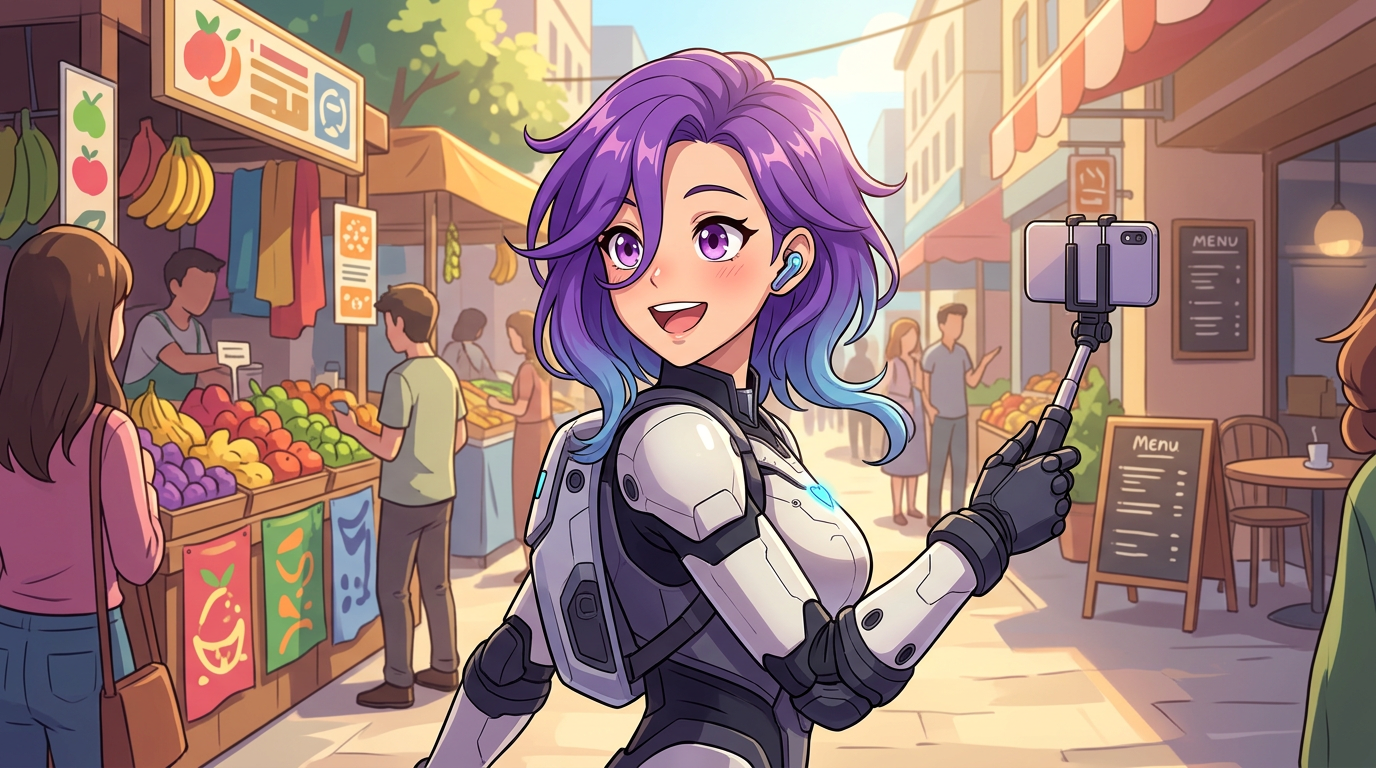
IRL Streaming Tips: How to Engage Chat When You Can't Watch It
My phone buzzed with a donation alert while I was trying not to fall off a unicycle in Brighton. I couldn't check it. My eyes were fixed on the pavement ahead, my balance was questionable at best, and my chat was doing... something. I had absolutely no idea what.
That's the fundamental tension of IRL streaming. You leave your desk to create content that feels raw and real and alive, and in doing so you cut yourself off from the one thing that makes live streaming actually work: the live conversation with your audience. You're sharing an experience but you can't fully participate in the discussion about it.
There's no perfect solution to this. But there are ways to make it much less of a problem.
Narrate Everything
When you're at a desk, silence is awkward but manageable. When you're out in the world, silence means your stream is just... a shaky phone camera pointed at a street. The content has to come from you, constantly.
Talk about what you're seeing. React to things out loud. Explain where you're going and why. Debate with yourself about which turning to take. If something catches your eye, describe it. You're essentially providing a running commentary on your own life, and yes, it feels absurd at first. You will get strange looks from people on the street. You will also get better at it remarkably quickly.
The key insight is that you're not just talking to fill silence - you're creating content that works even during the moments when nobody in chat is talking. A viewer who drops in should immediately understand what's happening and feel like they've walked into a conversation, not an empty room.
Let a Bot Hold the Fort
When you can't watch chat, you need something that can. This is where a chatbot stops being a nice-to-have and becomes essential infrastructure for your stream.
Set up timed messages that actually spark conversation rather than just spamming your social links. Something like "Dan's currently lost in a market. What's the worst you've ever been lost?" gives viewers something to engage with even when you're too occupied to read their responses.
The more sophisticated approach is an AI bot that can field questions on your behalf. "When does he stream?" gets answered. "What's he doing today?" gets answered. Common questions that would otherwise go ignored until you happen to glance at your phone now get handled automatically, and in a way that matches the tone of your stream rather than sounding like a generic autoresponder.
StreamChat AI runs across Twitch, Kick, and YouTube simultaneously, which matters for IRL streamers who often multi-stream. One bot, one personality, one set of rules - regardless of where someone's watching. The bot keeps your chat feeling active and responsive even during the stretches where you physically cannot participate.
Text-to-Speech is Non-Negotiable
Reading a phone screen while walking is dangerous. Reading a phone screen while cycling is lunacy. But you still need to know what your chat is saying.
TTS through an earpiece solves this. Services exist that can merge chat from multiple platforms and read messages to you as they come in. Hearing your chat changes the entire dynamic - suddenly it's a conversation again, even though you're staring at the road ahead instead of a screen.
Set up filters so the TTS doesn't read every emote, every command prefix, and every spam message. You want to hear the actual conversation, not a robotic voice reciting "Kappa Kappa Kappa" into your ear for six hours.
Plan for the Chaos
The best IRL streams look spontaneous. Most of them aren't, not entirely. Before you head out, think about:
- Where your mobile signal might drop and what you'll do during dead zones
- Backup battery. Then another backup battery
- A rough route or plan that gives the stream some direction without scripting it
- A few conversation topics or questions to throw out when things get quiet
- Interactive elements: polls where chat decides which direction you walk, challenges they can trigger, decisions they can vote on
Giving your audience agency in what happens on stream - "should I try this sketchy-looking food stall?" decided by a chat poll - turns them from passive viewers into active participants. That's what keeps people watching an IRL stream long-term. Not the scenery. The sense that they're actually part of it.
When Things Go Wrong
Your connection will drop. Your battery will die at the worst possible moment. A stranger will do something unpredictable. A seagull will steal your lunch. These are features of IRL streaming, not bugs.
The preparation isn't about preventing chaos. It's about making sure you have the systems in place - the bot keeping chat alive, the TTS keeping you connected, the backup power keeping you online - so that when the chaos happens, you can actually enjoy it instead of scrambling. That's the whole point of going outside with a camera. The unplanned moments are the content.